
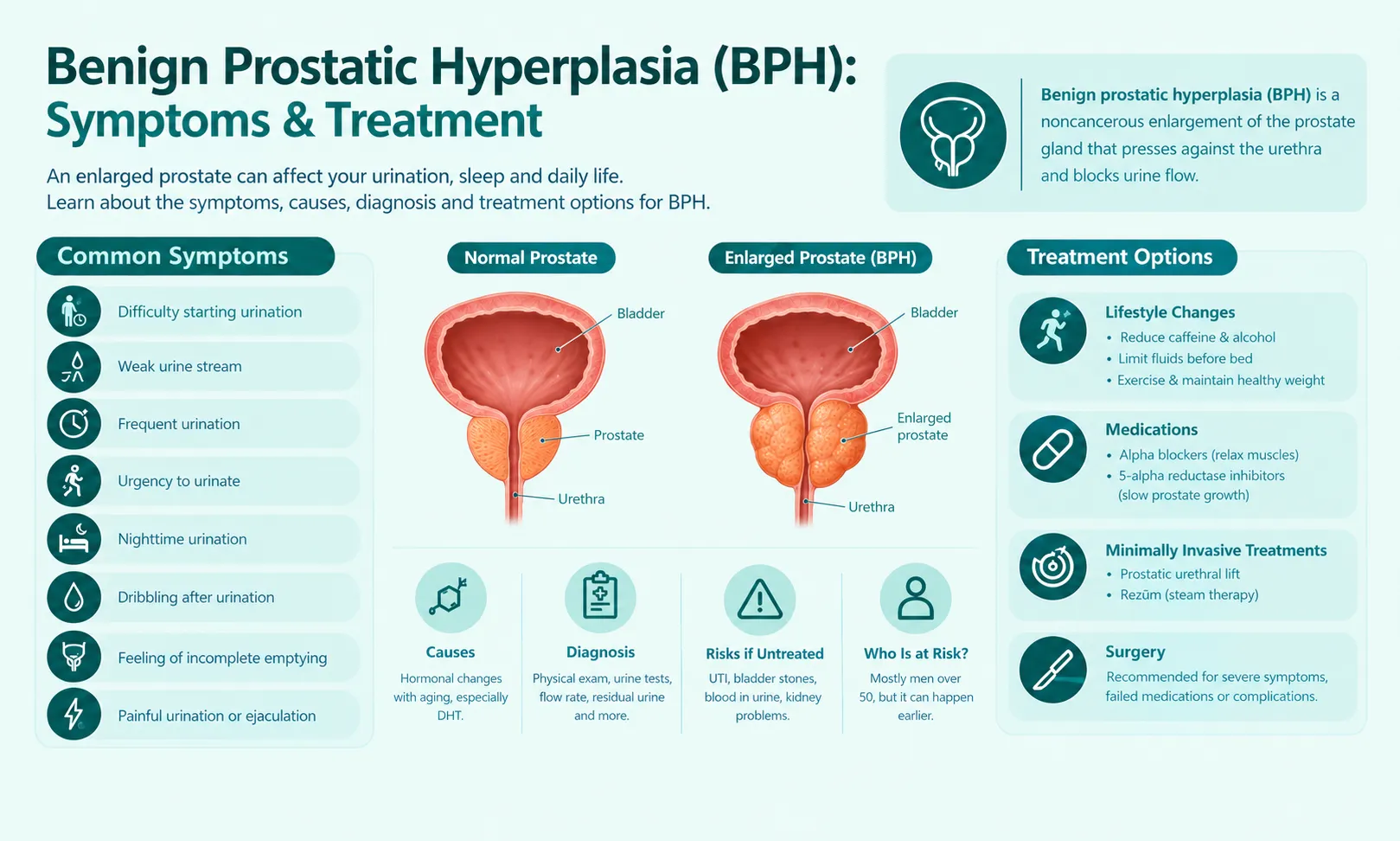
Frequent urination at night, a weak urine stream, or difficulty starting urination may be signs of an enlarged prostate. Benign prostatic hyperplasia (BPH) is a noncancerous enlargement of the prostate gland that presses against the urethra and blocks urine flow.
BPH becomes more common with age and may affect sleep and daily activities. In this article, we will cover its symptoms, causes, diagnosis, and available enlarged prostate treatment options.
What Is Benign Prostatic Hyperplasia (BPH)?
Benign prostatic hyperplasia is a disease of an enlarged prostate gland which is not associated with malignancy. This gland is situated under the bladder and partially surrounds the urethra – a channel through which urine is excreted from the body.
With the growing size of the gland it may put additional pressure on the urethra and lead to problems with urine output. Prostate enlargement is more frequently observed in older men, although not all of them experience problems due to this condition.
It is also worth mentioning that benign prostatic hyperplasia does not elevate the risk of prostate cancer development. Nonetheless, some urinary symptoms can be associated with both conditions.
What Are the Common BPH Symptoms?
Difficulty starting to urinate or needing to strain
Weak or interrupted urine stream
Frequent urination, especially during the night (nocturia)
Urgent need to pass urine
Feeling of incomplete emptying in the bladder
Dribbling at the end of urination
Untreated risks: Urinary tract infections (UTIs), bladder stones, or kidney damage
What Causes an Enlarged Prostate?
There is no definitive knowledge regarding the cause of BPH. It has been discovered that hormone changes which occur with aging have a significant effect on the prostate gland.
Changes related to testosterone and Dihydrotestosterone (DHT) may lead to prostatic hyperplasia among aged men.
What Happens If BPH Is Left Untreated?
BPH does not need immediate medical intervention if the condition is mild. In the event that the problem of obstruction progresses, it can lead to problems like urinary tract infection, bladder stones, hematuria, and even kidney problems because of the backflow of urine.
These are some of the reasons why one cannot just ignore urinary problems as part of growing old.
How Is Benign Prostatic Hyperplasia Diagnosed?
A urologist could evaluate your symptoms, your medical history and your general well-being to see whether BPH causes your problems with urination. Your evaluation would involve:
Physical examination and prostate examination
Urinalysis
Urinary flow rate measurements
Volume of residual urine in the bladder after urination
Other tests like cystoscopy depending on the situation
This kind of evaluation will assist the doctor in diagnosing other causes of your urinary symptoms.
Enlarged Prostate Treatment Options
The choice of enlarged prostate treatment is dependent on the degree of symptoms and the size of the prostate as well as other complications. Not all patients will require treatment immediately.
Watchful Waiting and Lifestyles
Some men with mild symptoms can be placed under observation without beginning any treatment straight away. Decreasing fluid intake before going to bed and drinking less caffeine and alcohol could benefit some symptoms.
Exercise and weight management will also help in improving general prostate and heart conditions.
Medicines
Medicine may aid in relaxing the muscles surrounding the prostate and bladder which makes it easier to urinate. This medication falls under the alpha blockers.
There are some medications which can decrease DHT production and help in slowing down prostate growth of prostate, one of them being 5-alpha reductase inhibitors.
Minimally Invasive Treatments
If medicine fails to help, minimally invasive treatments might be considered. They include prostatic urethral lift and a steaming method called Rezūm.
This treatment improves urinary flow while minimizing the obstruction by the enlarged prostate.
Surgery
Surgery might be required if there are difficult symptoms, if medicine failed or if there were complications. There are different methods that remove or reduce the prostate tissue that blocks the urine flow.
How Is the Right Treatment for Enlarged Prostate Chosen?
There is not one cure for enlarged prostate that works for everyone. The factors that a urologist needs to take into account when considering the options include:
Symptoms - how bad and how long they have been going on
Prostate size and shape
Flow and function of urine
Reaction to drugs
Any complications due to urination
Overall health of the person
The aim is to help the body function better with urination.
When Should You See a Urologist?
You should seek medical evaluation if urinary symptoms are persistent, worsening or affecting your sleep and daily activities.
Seek prompt medical attention if you are unable to urinate, notice blood in your urine, or develop pain, fever or chills along with urinary symptoms. These signs may require immediate evaluation.
Conclusion
Benign Prostatic Hyperplasia is an age-related condition that may cause problems like weak urine stream, frequent urination, difficulty in initiating urination and many more. Even though BPH is not cancer, it is advised that one must not overlook such symptoms, as, at times the problem could lead to complications due to blockage. According to the severity of the situation, the treatment could range from modification in life style, medications, minimally invasive techniques and surgery. For any treatment for BPH or enlarged prostate in particular, one must visit Dr. Anuj Arora, the urologist in Greater Noida.
Frequently Asked Questions About Enlarged Prostate (BPH)
1. What Is the Best Treatment for BPH?
The best treatment for benign prostatic hyperplasia (BPH) depends on symptom severity, prostate size, overall health, and whether complications are present. Mild symptoms may be managed with lifestyle changes and regular monitoring. Medicines such as alpha-blockers can improve urine flow, while 5-alpha reductase inhibitors may help shrink the prostate over time. If symptoms are severe or medicines do not work, minimally invasive procedures or surgery may be recommended.
2. What Are the 5 Warning Signs of BPH?
Five common warning signs of an enlarged prostate are:
Difficulty starting urination
Weak or interrupted urine flow
Frequent urination, especially at night
A feeling that the bladder has not emptied completely
Dribbling after urination
These symptoms can also occur with other urinary conditions, so medical evaluation is important. Being unable to urinate at all requires urgent medical attention.
3. What Is the First Stage of Prostate Enlargement?
There is no single universally accepted first stage of BPH based only on symptoms. Early signs may include waking up at night to urinate, needing to urinate more frequently, difficulty starting the urine stream, or a weaker flow. These symptoms can develop gradually and should be evaluated if they persist or affect daily activities.
4. Is an Enlarged Prostate Very Serious?
An enlarged prostate is usually a noncancerous condition and does not automatically mean a serious health problem. However, significant obstruction can prevent the bladder from emptying properly and may lead to urinary retention, bladder stones, urinary tract infections, or kidney problems. Seek urgent medical attention if you cannot urinate, have blood in your urine, or develop fever and chills with urinary symptoms.
5. Can an Enlarged Prostate Go Back to Normal?
An enlarged prostate does not usually return to its original size on its own. However, symptoms can improve with lifestyle changes and appropriate treatment. Certain medicines can reduce prostate size over time, while procedures and surgery can remove or reduce the tissue blocking urine flow. The right approach depends on the severity of the condition and the patient's medical evaluation.
6. What Foods Are Bad for an Enlarged Prostate?
No specific food has been established as a universal cause of BPH, and there is no single diet that cures an enlarged prostate. However, caffeine and alcohol may worsen urinary frequency, urgency, or nighttime urination in some men. Maintaining a balanced diet, staying physically active, and identifying foods or drinks that aggravate your symptoms may help support overall health and symptom management.
7. What Is the Fastest Way to Shrink an Enlarged Prostate?
There is no safe home remedy that can shrink an enlarged prostate immediately. Some medicines can help improve urine flow, while other medicines may gradually reduce prostate size over several months. If symptoms are severe or urinary obstruction is present, a urologist may recommend a suitable procedure or surgery. The fastest appropriate treatment depends on prostate size, symptoms, and the presence of complications.
8. What Is the Best Fruit for the Prostate?
There is no single fruit proven to shrink an enlarged prostate or cure BPH. Eating a variety of fruits and vegetables can help support overall health as part of a balanced diet. Fruits should be considered part of a healthy lifestyle, not a replacement for medical evaluation or prescribed treatment when prostate enlargement causes urinary problems.
9. What Is the Best Drink to Reduce Prostate Size?
No specific drink has been proven to reliably shrink an enlarged prostate. Drinking enough fluids throughout the day supports normal hydration, but limiting fluids close to bedtime may help reduce nighttime urination. Reducing caffeine and alcohol may also improve urinary symptoms in some men. If urinary problems persist, consult a urologist to discuss appropriate treatment options.
10.Is BPH the same as prostate cancer?
No. BPH refers to a benign condition that results in an enlarged prostate. However, there are some overlapping symptoms with prostate cancer; hence the need for proper evaluation of any persistent urinary symptoms.


