
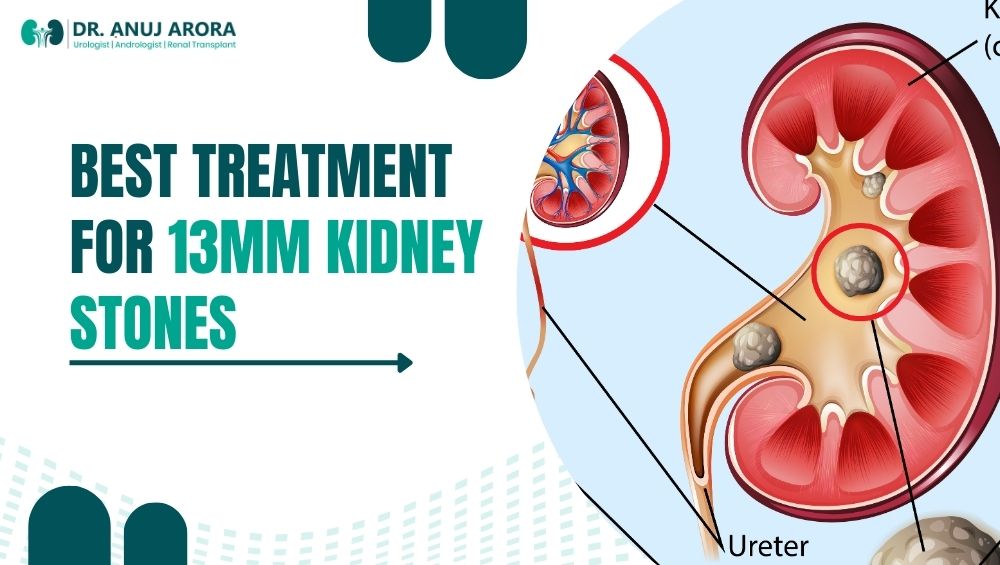
A 13mm kidney stone is considered a large stone and is very unlikely to pass naturally through urine. Stones of this size can cause severe pain, urinary blockage, kidney swelling, blood in the urine, and an increased risk of infection if left untreated. While medicines may help control symptoms temporarily, most patients require a minimally invasive procedure such as RIRS, URS, or PCNL for complete stone removal.
In this guide, we'll explain the best treatment for a 13mm kidney stone, whether it can pass naturally, available treatment options, recovery, possible complications, and when you should consult a urologist.
How Big Is a 13mm Kidney Stone?
A 13mm kidney stone is about the size of a small marble.
Compared to small stones (below 5mm), a 13mm stone:
Rarely passes on its own
Frequently gets stuck in the ureter
Causes intense pain (renal colic)
Because of its size, medical evaluation should not be delayed.
Can a 13mm Kidney Stone Pass Naturally?
A 13mm kidney stone rarely passes naturally because it is much larger than the normal diameter of the ureter. While very small stones may pass with medicines and increased fluid intake, a 13mm stone usually becomes stuck, causing severe pain or urinary blockage. In most cases, procedures such as RIRS, URS, or PCNL are required for complete stone removal.
Possible Complications of a 13mm Kidney Stone
If untreated, a 13mm kidney stone may lead to:
Urinary blockage (hydronephrosis)
Severe back or abdominal pain
Urinary tract infections or fever
Blood in urine (hematuria)
Permanent kidney damage
These risks make timely treatment essential.
Treatment Options for 13mm Kidney Stones
1. Medicines (Supportive Only)
Medicines may help reduce pain and improve comfort, but they cannot remove a 13mm kidney stone. They are mainly used to control symptoms while preparing for definitive treatment or after evaluation by a urologist.
Best For
Temporary symptom relief
Pain management
Patients waiting for surgery
Reducing discomfort before definitive treatment
Advantages
Helps relieve pain and discomfort
Reduces inflammation
Easy to take
May improve quality of life until treatment
Limitations
Does not remove the kidney stone
Not a permanent treatment
Low chance of passing a 13mm stone naturally
Surgery is usually required
2. RIRS – Retrograde Intrarenal Surgery (Preferred Treatment)
RIRS is one of the most effective treatments for most 13mm kidney stones. During the procedure, a flexible scope is passed through the natural urinary passage to reach the kidney, where a laser breaks the stone into tiny fragments. Since no external incision is required, recovery is generally quicker and less painful.
Best For
Most 13mm kidney stones
Stones located inside the kidney
Patients looking for a minimally invasive treatment
Stones suitable for laser fragmentation
Advantages
No external incision
High stone clearance rate
Faster recovery
Less pain after surgery
Short hospital stay
Limitations
Requires general or spinal anesthesia
Temporary DJ stent may be required
Rarely, a second procedure may be needed for complete stone clearance
3. Ureteroscopy (URS)
URS is recommended when a 13mm stone is located in the ureter. A thin scope is passed through the urinary tract, and a laser is used to break the stone into smaller fragments for removal or natural passage.
Best For
Stones located in the ureter
Patients with urinary obstruction
Stones causing severe pain
Advantages
Minimally invasive procedure
High success rate
Immediate stone treatment
Short hospital stay
Quick recovery
Limitations
Requires anesthesia
Temporary DJ stent may be needed
Mild burning or discomfort while passing urine for a few days
4. ESWL (Shock Wave Lithotripsy)
ESWL is a non-invasive procedure that uses shock waves to break kidney stones into smaller fragments that can pass through urine naturally. However, its success rate decreases for larger stones like 13mm.
Best For
Selected soft kidney stones
Patients who are not suitable for surgery
Stones located in the kidney or upper ureter
Advantages
No incision
Day-care procedure
Minimal recovery time
Low risk of complications
Limitations
Lower success rate for 13mm kidney stones
May require multiple treatment sessions
Not suitable for all stone types
Stone fragments may take time to pass
5. PCNL (Percutaneous Nephrolithotomy)
PCNL is usually recommended for large, hard, multiple, or complex kidney stones that cannot be treated effectively with RIRS or ESWL. A small incision is made in the back to remove the stone directly from the kidney.
Best For
Large or complex kidney stones
Hard kidney stones
Multiple kidney stones
Cases where other treatments are unsuitable
Advantages
Very high stone clearance rate
Effective for difficult stones
Removes large stones in a single procedure
Reduces the need for repeat procedures
Limitations
Requires hospital admission
Longer recovery than RIRS or URS
General anesthesia is required
Small incision is needed
Recovery After 13mm Kidney Stone Treatment
Recovery depends on the treatment used. Most patients undergoing RIRS or URS can return to normal activities within 2–5 days, while recovery after PCNL may take 1–2 weeks. Drinking plenty of water, taking prescribed medicines, and attending follow-up visits help ensure complete healing and reduce the risk of future kidney stones.
Is a 13mm Kidney Stone Dangerous?
Yes. A 13mm kidney stone can become dangerous if it blocks the flow of urine, causes severe pain, leads to infection, or affects kidney function. Because stones of this size rarely pass naturally, delaying treatment may increase the risk of kidney swelling (hydronephrosis), recurrent infections, and permanent kidney damage. Early diagnosis and appropriate treatment help prevent these complications.
Why RIRS Is Often the Best Treatment for 13mm Stones
Modern urology guidelines favor RIRS for stones around 13mm because it offers:
Minimal pain
Precise laser stone removal
Lower complication risk
Quick return to daily activities
Dr. Anuj Arora commonly recommends RIRS as first-line treatment when suitable.
Why Choose Dr. Anuj Arora for 13mm Kidney Stone Treatment
Dr. Anuj Arora is trusted for:
Expertise in RIRS, URS, and PCNL
Advanced laser stone surgery
Patient-centric decision making
Focus on stone removal + recurrence prevention
Conclusion
A 13mm kidney stone is unlikely to pass naturally and should not be ignored. Without timely treatment, it can lead to severe pain, urinary blockage, infection, kidney swelling, and, in some cases, permanent kidney damage. The best treatment for a 13mm kidney stone depends on factors such as the stone's size, location, and overall kidney health. Modern procedures like RIRS, URS, and PCNL provide safe, minimally invasive, and highly effective treatment options with excellent success rates.
If you have been diagnosed with a 13mm kidney stone or are experiencing symptoms such as persistent pain, blood in the urine, or difficulty passing urine, consult a urologist without delay. Dr. Anuj Arora, Best Urologist in Greater Noida, offers advanced kidney stone treatment with personalized care to help patients achieve safe stone removal, faster recovery, and long-term prevention of recurrence.
FAQs – 13mm Kidney Stone Treatment
1. Can a 13mm Kidney Stone Pass Naturally?
No. A 13mm kidney stone is considered too large to pass naturally in most cases. It is more likely to cause urinary blockage, severe pain, or infection and usually requires treatment such as RIRS, URS, or PCNL.
2. What Is the Best Treatment for a 13mm Kidney Stone?
The best treatment depends on the stone's location, hardness, and your overall health. For many patients, RIRS (Retrograde Intrarenal Surgery) is the preferred treatment because it is minimally invasive and offers a high stone clearance rate. In some cases, URS or PCNL may be recommended.
3. Is a 13mm Kidney Stone Dangerous?
Yes. A 13mm kidney stone can become dangerous if it blocks the flow of urine, causes severe pain, leads to infection, or results in kidney swelling. Without timely treatment, it may affect kidney function and increase the risk of complications.
4. How Long Does It Take to Recover After 13mm Kidney Stone Surgery?
Recovery depends on the treatment performed. Most patients who undergo RIRS or URS can return to their normal activities within a few days, while recovery after PCNL may take one to two weeks. Your doctor will provide specific recovery instructions based on your procedure.
5. Can a 13mm Kidney Stone Cause Blood in Urine?
Yes. A 13mm kidney stone can irritate the lining of the urinary tract, leading to blood in the urine (hematuria). If blood in the urine is accompanied by severe pain, fever, or difficulty passing urine, you should consult a urologist promptly.


