
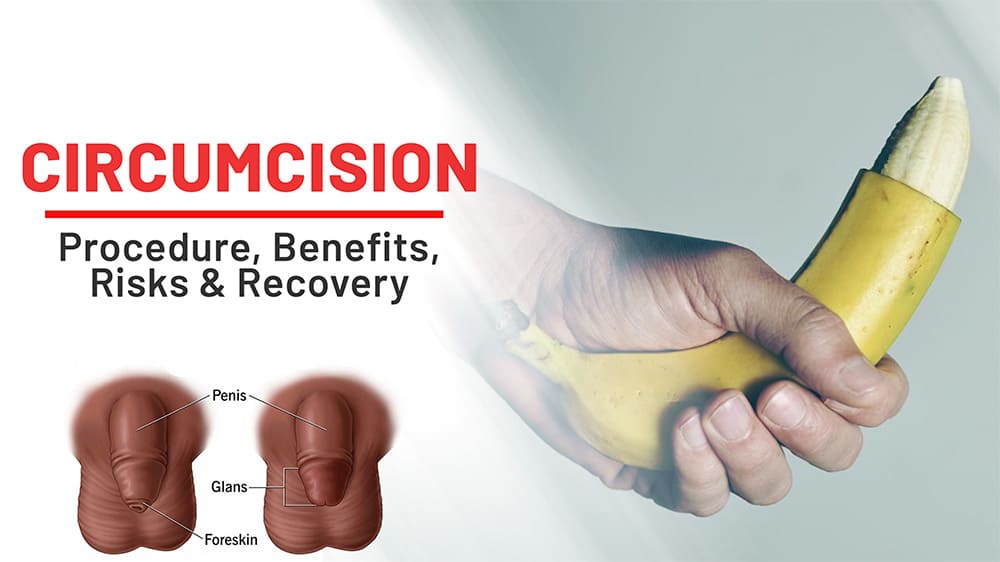
The urological procedure known as circumcision removes the foreskin that protects the head of the penis. The medical profession recommends circumcision as a treatment option for men and women because of its associations with cultural and religious traditions.
Foreskin issues create discomfort, infections and hygiene problems for many men which makes circumcision a necessary medical treatment. Patients who want to make informed decisions should learn about circumcision, its procedure, benefits, risks and recovery time.
This blog covers all essential aspects of circumcision, including the pros and cons of circumcision and when expert urological care is required.
What Is Circumcision?
The surgical operation of circumcision requires the removal of the foreskin which covers the penis head to permanently show the glans. After the procedure, the penis is referred to as a circumcised penis.
The main points of understanding state that:
Infants, children, and adults can undergo circumcision procedures.
Adults choose to undergo circumcision mainly for medical and hygienic purposes.
The procedure operates safely when a qualified urologist conducts it.
The procedure establishes better genital hygiene which leads to decreased infection probabilities.
Why Is Circumcision Performed?
Doctors recommend circumcision as a treatment option which serves both medical needs and preventive health requirements. Adults should undergo the treatment when their foreskin issues create problems with their everyday activities and sexual functions.
The following conditions represent the primary reasons:
Phimosis (a tight foreskin that cannot be retracted)
Recurrent Balanitis Balanoposthitis (infections of the foreskin and glans)
Pain during urination or sexual activity, together with urinary difficulties
The patient experiences poor genital hygiene because of their foreskin tightness
The patient suffers from multiple urinary tract infections
The procedure aims to stop all upcoming medical issues from occurring.
Circumcision Procedure Explained
The process of circumcision is normally done under local or regional anaesthesia and is completed within a short period of time. Modern methods of circumcision have made the process much safer, faster and more comfortable for the patient.
Overview of the process:
Pre-procedure assessment and medical examination
Administration of anaesthesia to ensure a painless process
Surgical excision of the foreskin using aseptic methods
Bleeding control and closure with absorbable sutures
Types of circumcision procedures:
Traditional surgical circumcision
Laser circumcision (reduced bleeding and faster recovery)
Stapler-assisted circumcision (contemporary and cosmetic procedure)
Benefits of Circumcision
Circumcision provides multiple health and hygiene advantages which become most effective when doctors perform the procedure for medical purposes.
Major benefits include:
Improved genital hygiene due to easier cleaning
Reduced risk of foreskin and penile infections
Relief from pain and discomfort caused by a tight foreskin
Lower chances of urinary tract infections
Reduced risk of certain sexually transmitted infections
Improved overall penile health
Risks and Possible Complications of Circumcision
Circumcision procedures should be treated as any surgical operation, as they carry inherent risks, although experienced urologists perform them with low complication rates.
Possible risks include:
The patient experiences mild pain and swelling after the procedure
The patient experiences temporary bleeding and infection
The patient develops delayed wound healing which occurs in rare case
Scarring occurs with modern techniques but it happens at an uncommon rate
The selection of a qualified specialist together with adherence to post-procedure care instructions results in a significant reduction of these risks.
Pros and Cons of Circumcision
Patients make their medical decisions after understanding the advantages and disadvantages of circumcision.
Pros:
Better hygiene and reduced infection risk
Long-term relief from foreskin-related problems
Prevention of recurrent medical issues
Improved ease of maintenance
Cons:
Surgical procedure with a short recovery period
Mild discomfort during the healing phase
Not medically necessary for everyone
The right path to circumcision evaluation requires a patient to have an extensive consultation with a urologist.
Recovery After Circumcision
The process of recovery from circumcision shows high success rates when people practice correct post-operative care. Most patients return to their normal activities after a short recovery time.
Recovery guidelines:
Mild pain and swelling are normal for a few days
The area needs to be maintained through cleaning and drying
The recommended period requires patients to avoid both strenuous activities and sexual intercourse
Patients should follow the medication instructions as prescribed by the doctor
Loose clothing should be worn by patients as it helps to minimise their pain
The complete healing process takes several weeks, depending on the specific method used and the person's ability to heal.
Choosing the Right Urologist for Circumcision
Choosing an experienced urologist is essential for safe, effective, and comfortable circumcision treatment. A skilled specialist can properly diagnose foreskin-related problems, recommend the right surgical method, and use advanced techniques that reduce pain, minimise bleeding, and support faster recovery. Good pre-operative guidance and proper post-procedure care also help prevent complications and improve long-term results.
Dr. Anuj Arora, who is experienced in circumcision surgery in Greater Noida, provides modern circumcision procedures with a patient-focused approach. His personalised treatment plans, advanced techniques, and careful follow-up support help patients achieve safe outcomes, better comfort, and quicker healing.
Conclusion
Circumcision is a safe and commonly performed urological procedure when done for the right medical reasons. Understanding the procedure, benefits, risks, and recovery time helps patients make informed decisions.
If you are considering circumcision for medical or personal reasons, consulting an experienced urologist like Dr. Anuj Arora, known as one of the best urologists in Greater Noida, can help you choose the right treatment with confidence.


