
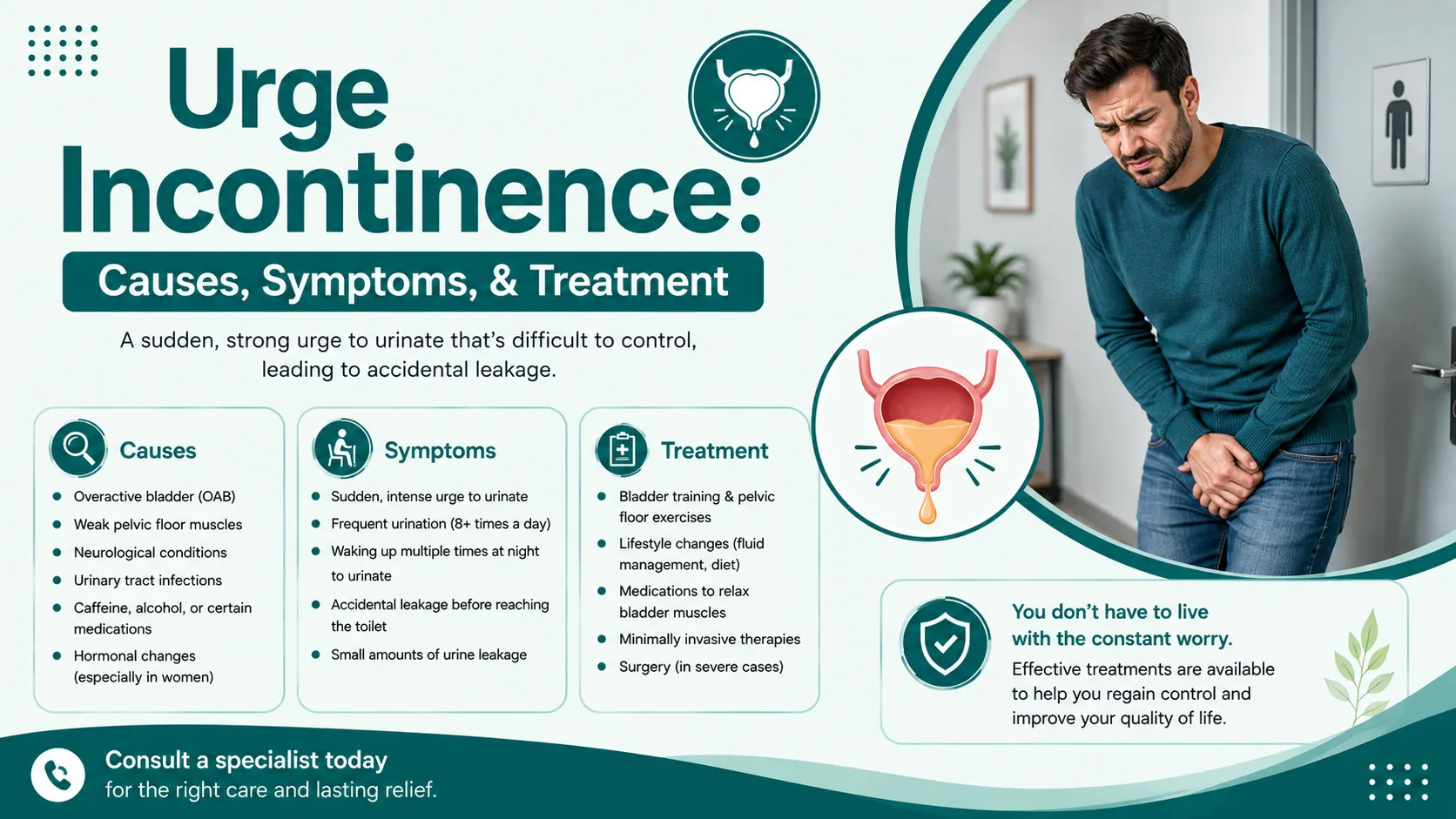
Urge incontinence is a type of urinary incontinence in which a person feels a sudden, strong need to urinate and may leak urine before reaching the toilet. It is often associated with an overactive bladder, where the bladder contracts suddenly even when it is not completely full.
Many people describe the symptom as, “I have to pee so bad I can’t move,” because the urge can be sudden and difficult to control. Some people may leak urine when they hear running water, arrive home, or feel a strong urge that gives them very little time to reach the bathroom.
Urge incontinence can affect both men and women and may interfere with sleep, work, travel, exercise, and daily activities. The good news is that symptoms can often be managed with lifestyle changes, bladder training, pelvic-floor exercises, medicines, and other treatments depending on the cause and severity.
What Is Urge Incontinence?
Urge incontinence happens when a sudden, strong urge to urinate is followed by involuntary urine leakage.
It is different from stress incontinence, where urine leaks during coughing, sneezing, laughing, exercising, or lifting.
Some people can have both types, which is called mixed urinary incontinence.
Urgency incontinence is another term used for urge incontinence. It is also commonly associated with overactive bladder symptoms.
What Are the Symptoms of Urge Incontinence?
Common symptoms include:
Sudden and strong urges to urinate
Urine leakage before reaching the toilet
Frequent trips to the bathroom
Urinating several times during the night
Difficulty delaying urination
Small amounts of urine leaking unexpectedly
Feeling that you must find a bathroom immediately
Urgency triggered by situations such as hearing running water
Some people experience urgency without leakage, while others experience both urgency and accidental urine loss.
What Causes Urge Incontinence?
There can be several urge incontinence causes, and sometimes no single cause is identified.
Common factors include:
Overactive Bladder
The bladder muscles may contract too often, creating a sudden need to urinate even when the bladder is not full.
Urinary Tract Infection
A urinary tract infection can temporarily cause urgency, frequency, burning, and sometimes urine leakage.
Constipation
Constipation can put pressure on the bladder and may worsen urinary urgency.
Diabetes
Diabetes can affect bladder function and the nerves that control urination.
Neurological Conditions
Conditions affecting the brain, spinal cord, or nerves can interfere with communication between the bladder and nervous system.
Certain Medicines
Some medicines can increase urine production or affect bladder control.
Excessive Caffeine or Alcohol
Caffeine and alcohol can increase urinary frequency and may worsen urgency in some people.
Bladder Irritation
Concentrated urine from inadequate fluid intake, certain drinks, or other bladder irritants may contribute to urgency symptoms.
Why Do I Feel Like I Have to Pee So Bad I Can't Move?
The feeling “I have to pee so bad I can’t move” can occur when the bladder sends a very strong urgency signal to the brain.
Instead of gradually feeling the need to urinate, the urge can appear suddenly and intensely. Some people may feel that they have only a few seconds or minutes to reach a toilet.
If this happens repeatedly, especially with urine leakage, it may be a sign of urgency incontinence or overactive bladder and should be evaluated.
Urge Incontinence in Men
In men, urinary urgency can sometimes be associated with prostate problems, particularly when an enlarged prostate affects bladder emptying.
Other symptoms may include:
Weak urine stream
Difficulty starting urination
Feeling that the bladder has not emptied completely
Frequent urination
Getting up repeatedly at night
Urgent need to urinate
A prostate problem is not the only possible cause, so proper evaluation is important.
Urge Incontinence in Women
Women can develop urgency incontinence at different stages of life. Pregnancy, childbirth, menopause, pelvic-floor changes, urinary infections, and other bladder problems can contribute to urinary symptoms.
Not every case of urinary leakage in women is urge incontinence. The symptoms and pattern of leakage help determine the type.
How Is Urge Incontinence Diagnosed?
A doctor will usually ask about:
How often you urinate
How often urine leaks
Whether you experience sudden urgency
Fluid and caffeine intake
Medicines you take
Previous urinary problems
Medical conditions
Any pain, burning, or blood in the urine
You may also be asked to keep a bladder diary recording your fluid intake, bathroom visits, urgency, and leakage.
Depending on your symptoms, the doctor may recommend:
Urine testing
Blood tests in selected cases
Physical examination
Assessment of bladder emptying
Ultrasound or other investigations when needed
The aim is to identify the cause and rule out conditions such as infection, obstruction, urinary retention, or other bladder problems.
Urge Incontinence Treatment
Urge incontinence treatment depends on the cause, severity, and response to initial measures.
1. Bladder Training
Bladder training involves gradually increasing the time between bathroom visits and learning to respond to urgency without immediately rushing to the toilet.
It is often used as part of behavioral treatment for overactive bladder and urgency incontinence.
2. Pelvic-Floor Exercises
Pelvic-floor muscle exercises can help improve bladder control. A healthcare professional or pelvic-floor therapist can teach the correct technique.
Quick pelvic-floor contractions may also help some people suppress a sudden urge when it occurs.
3. Manage Caffeine and Alcohol
Coffee, tea, cola, energy drinks, and alcohol may worsen urgency or increase urine production in some people.
Reducing these drinks may help identify whether they are contributing to symptoms.
4. Maintain Appropriate Fluid Intake
Drinking too much fluid can increase urinary frequency, but drinking too little can make urine concentrated and irritating.
Do not severely restrict fluids just to avoid leakage. Your healthcare professional can advise you about an appropriate fluid intake based on your health and activities.
5. Treat Underlying Conditions
If urgency is caused or worsened by a urinary infection, constipation, diabetes, prostate problems, or another condition, treating that problem may improve bladder symptoms.
6. Medicines
When lifestyle and behavioral measures are not enough, a doctor may prescribe medicines for urgency incontinence or overactive bladder.
Depending on the individual situation, medicines may include anticholinergic medicines or beta-3 agonists.
These medicines are not suitable for everyone, so they should be used under medical supervision.
7. Botox Treatment
In selected patients whose symptoms do not respond adequately to other treatments, botulinum toxin injections into the bladder may be considered.
The treatment relaxes the bladder muscle and can reduce urgency and urine leakage in appropriate patients.
8. Other Treatments
Some patients may be considered for electrical nerve stimulation or other specialist treatments when conservative measures and medicines do not provide enough relief.
The appropriate option depends on the individual's symptoms and medical history.
Can Urge Incontinence Be Treated Without Surgery?
Yes. Many people begin with non-surgical treatments such as:
Bladder training
Pelvic-floor exercises
Urgency-suppression techniques
Caffeine reduction
Appropriate fluid management
Lifestyle changes
Medicines when required
The treatment plan should be individualized because the cause and severity of symptoms differ between people.
How Can You Control a Sudden Urge to Urinate?
When a sudden urge appears, rushing immediately toward the bathroom may sometimes make the urgency feel stronger.
Some people can benefit from:
Staying still for a moment
Taking slow, relaxed breaths
Performing a few quick pelvic-floor contractions
Distracting yourself briefly
Walking calmly toward the bathroom rather than rushing
These urgency-suppression techniques can be taught as part of bladder training.
Is Urge Incontinence Normal With Age?
Urinary urgency and incontinence become more common with age, but they should not simply be accepted as an unavoidable part of getting older.
Treatable causes may contribute to symptoms, and many people can improve their bladder control with appropriate evaluation and treatment.
When Should You See a Doctor?
Consult a healthcare professional if:
Urine leaks repeatedly
You suddenly cannot control your bladder
You have frequent or urgent urination
Symptoms are disturbing your sleep
You are avoiding travel or activities because of bathroom concerns
You have difficulty emptying your bladder
Symptoms are getting worse
Seek prompt medical attention if urgency or leakage occurs with blood in the urine, painful urination, inability to pass urine, severe pelvic pain, or other concerning symptoms.
Conclusion
Urge incontinence can cause sudden, difficult-to-control urges to urinate and accidental urine leakage. It may be linked to an overactive bladder, urinary infection, constipation, certain medications, prostate problems, or other underlying conditions.
The first step in treatment is identifying the cause. Depending on the condition, bladder training, pelvic-floor exercises, lifestyle changes, medicines, or other specialist treatments may help control symptoms.
If you frequently feel “I have to pee so bad I can't move,” cannot reach the bathroom in time, or urinary urgency is affecting your daily life, a urological evaluation can help determine the cause and guide appropriate treatment.
Frequently Asked Questions (FAQs)
1. What is the difference between urge incontinence and stress incontinence?
Urge incontinence involves a sudden, strong need to urinate followed by leakage. Stress incontinence occurs when activities such as coughing, sneezing, laughing, or exercising put pressure on the bladder and cause urine to leak.
2. Can urge incontinence go away on its own?
Sometimes temporary urgency can improve when the underlying cause, such as a urinary infection or certain lifestyle factors, is addressed. Persistent symptoms should be evaluated rather than ignored.
3. Can drinking less water cure urge incontinence?
Not necessarily. Drinking too little can make urine concentrated and may irritate the bladder. Fluid intake should be appropriate rather than severely restricted.
4. Can caffeine make urge incontinence worse?
Yes. Caffeine can increase urine production and may worsen urgency in some people. Reducing coffee, tea, cola, and other caffeinated drinks may help.
5. Can men with an enlarged prostate develop urge incontinence?
Yes. Prostate enlargement can cause urinary symptoms such as urgency, frequency, weak flow, and incomplete bladder emptying. However, other causes of urgency should also be considered.
6. Are pelvic-floor exercises useful for urge incontinence?
Yes. Pelvic-floor muscle training, including techniques for suppressing urgency, can be part of behavioral treatment for urgency incontinence and overactive bladder.
7. Is urge incontinence a serious condition?
Urge incontinence is often treatable, but persistent symptoms should be evaluated because they may be related to infection, bladder problems, neurological conditions, prostate disease, or other health issues.
8. Can urge incontinence be completely cured?
The outcome depends on the underlying cause. Some people experience major improvement with lifestyle changes and bladder training, while others may need medicines or additional treatment to control symptoms.


