
The diagnosis of a 9mm kidney stone usually raises many eyebrows immediately. Many patients start searching for answers to queries like these: Is the 9mm renal stone dangerous? Can it pass naturally? Can medicines work, or is surgery the only option?
A 9mm kidney stone is borderline large. Unlike smaller stones, it does not easily pass and may pose persistent pain, blockage of the urinary passage, or infection if left untreated in time. Hence, options for treatment must be sought as early as possible to save the kidney from damage and to avoid complications.
In this blog, we will explain 9mm kidney stone treatment, medicine vs surgery, and guide you about the safest and most effective approach under the guidance of Dr. Anuj Arora, a trusted Urologist in Greater Noida.
Is a 9mm Kidney Stone Dangerous?
The most common question is whether a 9mm kidney stone is dangerous.
The answer is yes in many cases, if left untreated. A stone of this size may easily get stuck in the ureter and block the normal flow of urine from the kidney towards the bladder. This obstruction can result in:
Severe and frequent pain
Hydronephrosis-hydrometra or swelling of the kidney
Urinary tract infection
Gradual renal impairment. Owing to these risks, doctors do not often advise allowing a 9mm stone to pass with time or delaying treatment.
How to Treat a 9mm Kidney Stone
The size of a 9mm kidney stone is usually considered borderline and urologists take into consideration the following when making treatment decisions:
Stone location and composition
Symptom severity
Kidney swelling or obstruction
Infection present
Overall renal function. The emphasis of treatment is usually active stone removal, rather than a wait-and-see approach, to prevent complications and provide lasting relief.
When Is 9mm Kidney Stone Surgery Required?
Confused About Your Symptoms? Get Expert Advice Today.
Book an appointment with Dr. Anuj Arora or connect instantly on call.
9mm kidney stone surgery should be suggested in most instances, and especially when the following conditions are encountered:
Pain can be severe or recurrent.
The stone is not moving on the follow-up scans
There is kidney swelling or obstruction
Infection
Medications are not able to manage the symptoms
Contemporary stone surgeries are highly successful and minimally invasive methods, enabling the total removal of stones without resorting to open surgery.
Confused About Your Symptoms? Get Expert Advice Today.
Book an appointment with Dr. Anuj Arora or connect instantly on call.
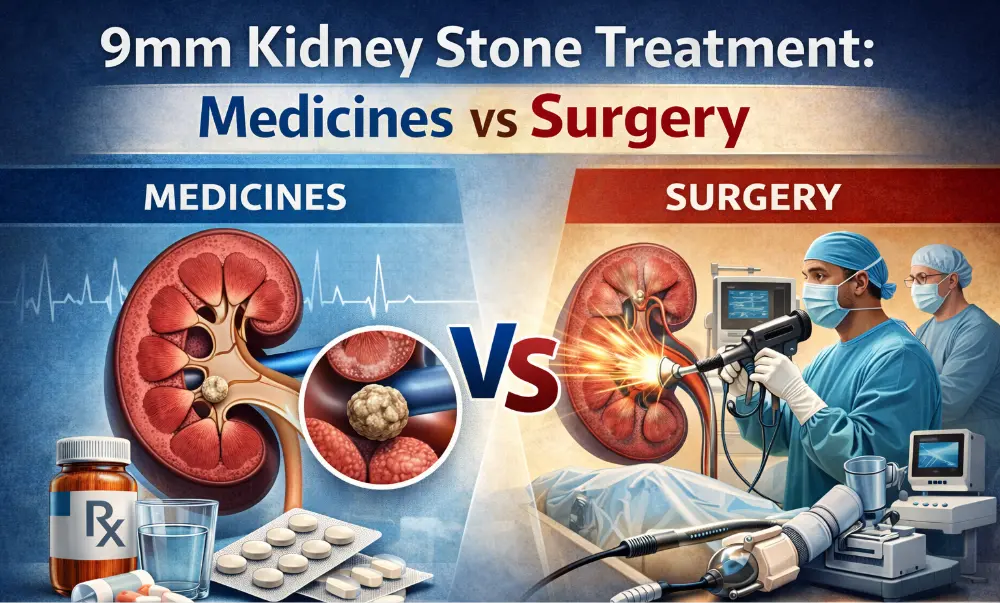
Medicines vs Surgery for 9mm Kidney Stone – What Works Better?
Medicines
Main role: Symptom control (pain relief, infection control)
Effectiveness for a 9mm kidney stone: Low
Pain relief: Temporary
Stone removal: Does not remove the stone
Time to resolution: Unpredictable; stone may not pass
Risk if delayed: Higher risk of infection, obstruction, or kidney damage
Best suited for: Smaller kidney stones (usually below 6mm)
Surgery
Main role: Complete stone removal
Effectiveness for a 9mm kidney stone: Very high
Pain relief: Long-term relief after stone removal
Stone removal: Yes, stone is completely removed
Time to resolution: Planned, faster, and controlled
Risk if delayed: Low when done at the right time
Best suited for: Most 9mm kidney stones
Medicines can help manage pain temporarily, but they rarely eliminate a stone of this size. Surgery removes the stone completely and prevents repeat blockage or kidney injury.
Surgical Treatment Options for a 9mm Kidney Stone
Confused About Your Symptoms? Get Expert Advice Today.
Book an appointment with Dr. Anuj Arora or connect instantly on call.
For most patients, surgery is the recommended and definitive treatment.
1. ESWL (Shock Wave Lithotripsy)
Non-invasive
Breaks stone into smaller fragments
Best for kidney or upper ureter stones
May need multiple sessions for 9mm stones
2. URS (Ureteroscopy) – Most Common
Minimally invasive
Laser breaks stone and removes fragments
High success rate for 9mm stones
Short hospital stay
3. PCNL (Rarely Needed)
Used if stone is very hard or multiple stones present
Usually for stones >15mm
Confused About Your Symptoms? Get Expert Advice Today.
Book an appointment with Dr. Anuj Arora or connect instantly on call.
Recovery After 9mm Kidney Stone Surgery
Recovery after 9mm kidney stone surgery is usually quick, especially with minimally invasive procedures such as Ureteroscopy (URS) or Shock Wave Lithotripsy (ESWL). Many patients can return home the same day or within 24 hours, depending on the treatment performed and their overall health.
During recovery, your doctor may advise you to:
Drink plenty of water to help flush out any remaining stone fragments.
Take prescribed medications to manage mild discomfort or prevent infection.
Avoid strenuous physical activity for a few days.
Attend follow-up appointments and stent removal (if one has been placed).
Most patients resume their normal daily activities within a few days, although complete recovery may vary depending on the size and location of the stone and the treatment performed.
When Should You See a Urologist Immediately?
Severe or persistent pain
Fever with chills
Blood in urine
Difficulty passing urine
Repeated vomiting
These are signs that medical or surgical intervention should not be delayed.
Related Blogs
Related Treatments
Conclusion
If you have a kidney stone measuring 9mm in diameter, you should never ignore the condition. Even if you take pain medicines, you will not be able to pass the 9mm kidney stone using the drugs, as these medicines cannot remove the kidney stone effectively. In most instances, surgical procedures will prevent you from developing an infection, kidney swelling, or any form of kidney problems.
If you have ever been diagnosed with a 9mm kidney stone or are suffering from any type of symptom, you must seek the advice of a professional. With the care of Dr. Anuj Arora, who is one of the best urologists in Greater Noida, you will get the right treatment for your Kidney Stones.
Frequently Asked Questions
Can a 9mm kidney stone pass without surgery?
A 9mm kidney stone has a relatively low chance of passing naturally. While medications and increased fluid intake may help in selected cases, many stones of this size require medical intervention, particularly if they cause severe pain, urinary blockage, or infection.
Which surgery is best for a 9mm kidney stone?
The most suitable treatment depends on the stone's location, size, and composition. Ureteroscopy (URS) with laser lithotripsy is commonly recommended for many 9mm stones, while ESWL (Shock Wave Lithotripsy) may be appropriate for selected kidney stones. Your urologist will recommend the most suitable option after evaluation.
How long does it take to recover after 9mm kidney stone surgery?
Recovery varies depending on the procedure performed. Most patients recover within a few days after minimally invasive surgery and can return to their routine activities soon, although complete healing may take one to two weeks.
When should I see a doctor for a 9mm kidney stone?
You should seek medical attention if you experience severe or persistent pain, fever, chills, difficulty passing urine, blood in the urine, repeated vomiting, or symptoms that do not improve with medication. Early evaluation helps prevent complications and protects kidney function.


