
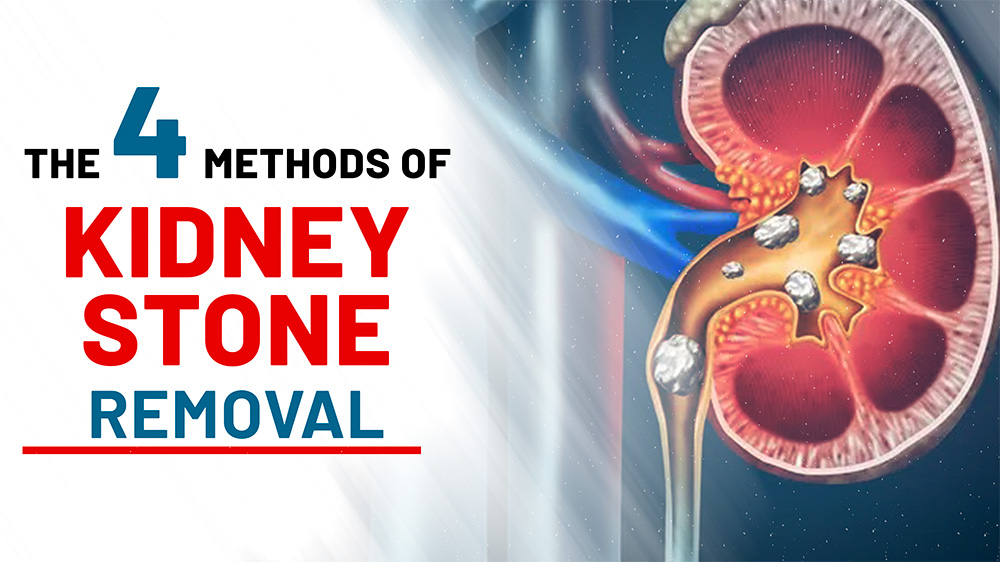
Kidney stones do not always require surgery. Depending on the size, location and symptoms of the stone, treatment may range from medicines and observation to procedures such as ESWL, ureteroscopy (URS) and PCNL.
If you are searching for the 4 methods for kidney stone removal, it is important to understand that there is no single treatment that works best for every stone. A small stone may pass naturally, while a larger or obstructing stone may require a procedure.
In this guide, we explain the 4 kidney stone removal methods, when each option may be considered, their advantages and limitations, recovery expectations, and how a urologist decides which treatment is appropriate.
What Are the 4 Methods of Kidney Stone Removal?
The four commonly used approaches discussed in this guide are:
Medication and observation – mainly for selected small stones that may pass naturally.
ESWL (Extracorporeal Shock Wave Lithotripsy) – uses shock waves to break selected stones into smaller fragments.
Ureteroscopy (URS) – uses a thin scope to reach the stone and may use a laser to break or remove it.
PCNL (Percutaneous Nephrolithotomy) – uses a small access tract into the kidney to remove larger or complex stones.
The appropriate method depends on the stone size, location, composition, symptoms, blockage, infection and overall kidney health.
Which Is the Best Method for Kidney Stone Removal?
There is no single kidney stone removal method that is best for every patient. The choice depends on factors such as the size and location of the stone, its composition, symptoms, urinary blockage, infection and kidney function.
Small stones may sometimes pass naturally with medicines and medical monitoring. Stones that are unlikely to pass, cause persistent symptoms or create blockage may require a procedure such as ESWL, URS or PCNL.
A urologist evaluates the imaging reports and clinical condition before recommending the most suitable treatment.
When Is Kidney Stone Removal Required?
The body can eliminate tiny kidney stones through natural processes when people consume more fluids and take their prescribed medications.
The need for kidney stone removal arises when stones reach a size that makes passing them impossible and when they induce ongoing pain, obstruct urine flow, cause multiple infections, and lead to renal bleeding and swelling.
The process of treatment must start immediately because waiting will make symptoms worse, and kidney function will be damaged. The evaluation process requires imaging tests to determine whether patients need conservative treatment methods or kidney stone surgery.
How Do Doctors Choose the Right Kidney Stone Removal Method?
Doctors recommend the most suitable treatment after considering several important factors, including:
Size of the kidney stone
Stone location (kidney or ureter)
Stone hardness and composition
Presence of urinary blockage
Infection or kidney swelling
Kidney function
Previous history of kidney stones
Overall health of the patient
A detailed clinical evaluation and imaging tests help determine the safest and most effective treatment option for each individual.
Method 1: Kidney Stone Removal Without Surgery
Not all kidney stones require surgery. Small kidney stones, usually measuring less than 5–6 mm, may pass naturally through urine with conservative treatment. Doctors may recommend increased fluid intake, pain-relieving medications, and medicines that help relax the ureter to make stone passage easier. During this period, regular follow-up with imaging tests is important to ensure the stone is progressing and not causing blockage or infection.
Advantages
No surgery or hospital admission required
Suitable for small kidney stones
Lower treatment cost
Minimal recovery time
Avoids anesthesia and surgical risks
Limitations
Effective only for selected small stones
Stone passage may take several days or weeks
Ongoing pain may occur until the stone passes
May not work if the stone causes blockage, infection, or persistent symptoms
Surgery may still be required if the stone does not pass naturally
Method 2: Extracorporeal Shock Wave Lithotripsy (ESWL)
ESWL is a non-invasive kidney stone treatment that uses shock waves to break the stone into tiny fragments so they can pass naturally through urine. It is usually recommended for small to medium-sized kidney stones located inside the kidney or upper ureter.
Advantages
No surgical incision
Usually performed as a day-care procedure
Quick recovery with minimal discomfort
Suitable for selected kidney stones
Limitations
May require more than one session
Less effective for very hard stones
Not ideal for larger stones
Small fragments may still take time to pass naturally
Method 3: Ureteroscopy (URS)
URS is one of the most commonly performed minimally invasive procedures for kidney stone removal. A thin scope is passed through the urinary passage to locate the stone. A laser is then used to break the stone into smaller pieces, which are removed or allowed to pass naturally.
Advantages
High success rate
Immediate stone removal
No external cuts or stitches
Suitable for stones in the ureter and kidney
Limitations
Usually requires anesthesia
Temporary ureteral stent may be needed
Mild burning during urination for a few days after the procedure
Method 4: Percutaneous Nephrolithotomy(PCNL)
PCNL is recommended for large kidney stones, multiple stones, or stones that cannot be treated successfully with ESWL or URS. A small incision is made in the back to access the kidney and remove the stones directly.
Advantages
Best option for large kidney stones
High stone clearance rate
Reduces the need for repeated procedures
Limitations
Requires hospitalization
Slightly longer recovery than URS
Usually performed under general anesthesia
Comparison of the 4 Methods of Kidney Stone Removal
How Long Does Kidney Stone Removal Take?
The duration of kidney stone removal depends on the treatment used. Medical management may continue for several days or weeks while waiting for the stone to pass naturally. ESWL usually takes 30–60 minutes, ureteroscopy (URS) generally takes 45–90 minutes, and PCNL may require 1–3 hours, depending on the size and complexity of the stone. Most minimally invasive procedures allow patients to return home the same day or after a short hospital stay.
Can Kidney Stones Be Removed Without Surgery?
Yes, some small kidney stones may pass naturally without a surgical procedure. The approach may include medical treatment, adequate fluid intake and observation under a doctor's supervision.
However, not every kidney stone can be removed without a procedure. The chances of natural passage depend on factors such as:
Stone size
Stone location
Urinary blockage
Symptoms
Infection
Kidney function
If a stone does not pass, causes persistent pain, blocks urine flow or is associated with infection, a urologist may recommend a procedure such as ESWL, ureteroscopy or PCNL.
Choosing the Right Urologist for Kidney Stone Treatment
Successful kidney stone treatment depends on selecting an experienced and skilled urologist. An expert doctor can evaluate the size, location, and type of stone using modern diagnostic tools and then recommend the most suitable treatment, whether it is medication, ESWL, ureteroscopy, or PCNL.
Advanced technology, proper planning, and personalised care help reduce complications, speed up recovery, and prevent future stone formation. A patient-focused approach also ensures better comfort, clear communication, and long-term results.
For safe and effective kidney stone treatment with personalized care and advanced techniques, you can consult Dr. Anuj Arora, who is known for providing reliable guidance and comprehensive kidney stone management.
Conclusion
Kidney stones can cause severe pain, but modern medical treatments provide safe and effective solutions. The right option depends on the size, location, and condition of the stone, and may include non-surgical care, ESWL, ureteroscopy, or PCNL. Understanding these methods helps patients feel more confident and prepared while choosing treatment.
Early diagnosis and proper care are important for faster recovery and preventing future stones. Following medical advice, staying hydrated, and making simple lifestyle changes can improve long-term kidney health and reduce the chances of recurrence.
If you are facing kidney stone symptoms or planning treatment, you can consult Dr. Anuj Arora, the best Urologist in Greater Noida, for expert guidance, personalised care, and safe treatment options.
Frequently Asked Questions
1. Which is the best method for kidney stone removal?
The best kidney stone removal method depends on the size, location, and severity of the stone. Small stones may pass naturally with medicines and adequate hydration, while larger stones may require treatments such as ESWL, Ureteroscopy (URS), or PCNL. A urologist can suggest the most suitable option after evaluation.
2. Can kidney stones be removed without surgery?
Yes, some small kidney stones can pass naturally with adequate fluids, medicines, and medical supervision. However, larger stones or those causing severe pain, urinary blockage, or infection may require a minimally invasive procedure for safe and effective removal.
3. What are the 4 methods of kidney stone removal?
The commonly used methods include medicines and observation, ESWL, Ureteroscopy (URS), and PCNL. The choice depends on factors such as stone size, location, symptoms, and the patient’s overall health.
4. Which kidney stone removal method is best for a large stone?
For larger or complex kidney stones, PCNL is often considered because it allows the stone to be removed through a small access tract. However, URS or other treatments may be suitable depending on the stone’s exact size and location.
5. Is kidney stone removal painful?
Kidney stone removal procedures are generally performed under appropriate anesthesia or sedation, so significant pain is usually not felt during the procedure. Some temporary discomfort, mild pain, or burning while urinating may occur after treatment.
6. When is surgery required for kidney stone removal?
A procedure may be recommended when a stone is too large to pass naturally, causes persistent or severe pain, blocks urine flow, or results in infection. The urologist determines whether treatment is necessary after assessing the stone and the patient’s condition.
Related Blogs


