
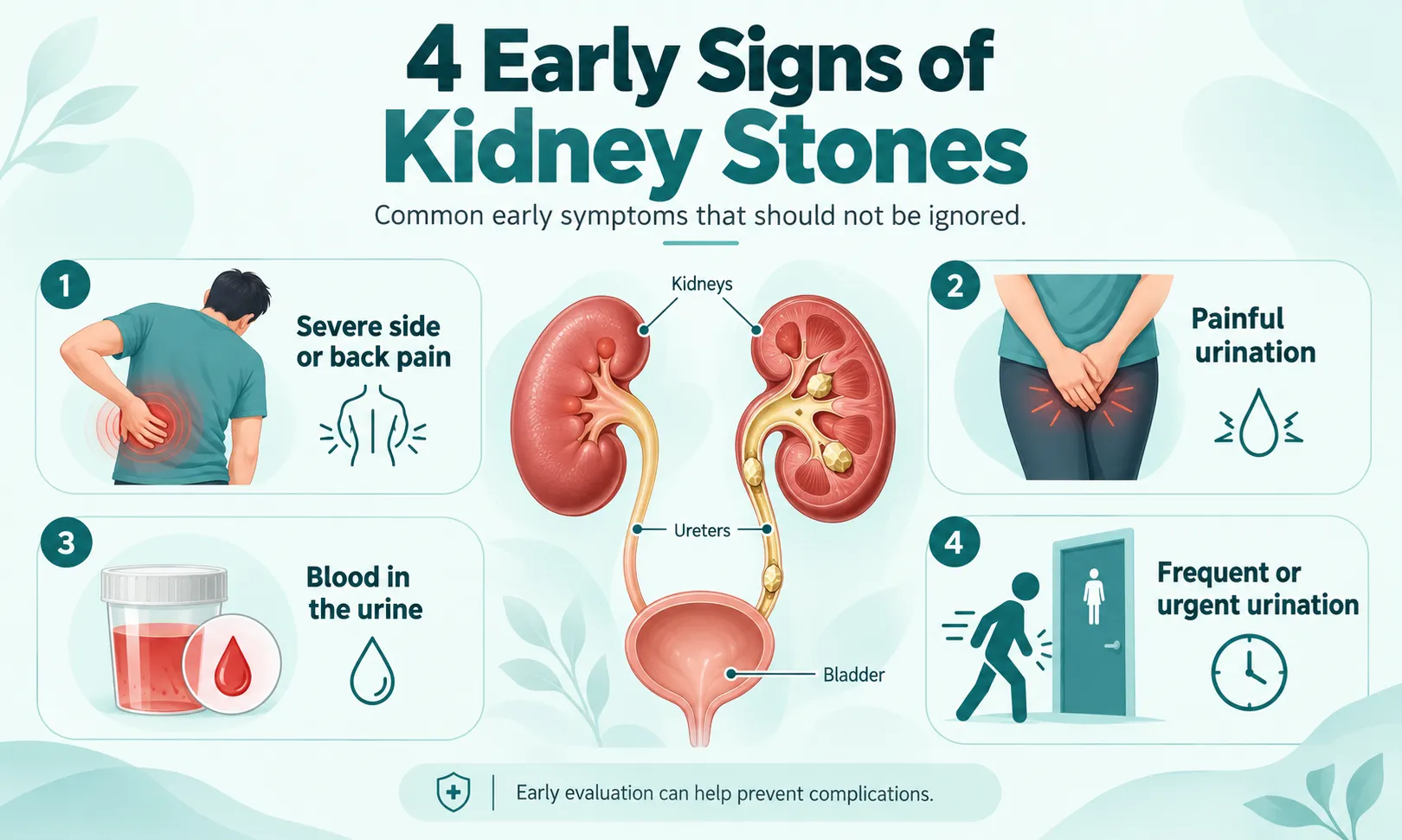
Kidney stones can sometimes remain unnoticed until they begin to move through the urinary tract. The four most common early signs of kidney stones include severe pain in the side or back, painful urination, blood in the urine, and a frequent or urgent need to urinate.
The pain may start suddenly, come in waves, and spread toward the lower abdomen or groin. Some people may first notice burning during urination, pink or red urine, or repeated urges to pass urine.
In this blog, we will explain these 4 early signs of kidney stones, how the symptoms may develop, when to seek medical help, and how kidney stones are diagnosed.
What Are Kidney Stones?
Kidney stones are hard deposits made from minerals and salts that form inside the kidneys. They can develop when certain substances in the urine become concentrated and form crystals that gradually grow into stones.
Some small stones may remain in the kidney without causing noticeable symptoms. Problems often begin when a stone moves into the ureter, the narrow tube connecting the kidney to the bladder. This can cause pain, urinary changes and other early kidney stone symptoms.
4 Early Signs of Kidney Stones
The early signs of kidney stones can vary depending on the stone’s size, location, and whether it has started moving through the urinary tract. However, these four symptoms are commonly noticed and should not be ignored.
1. Severe Pain in the Side or Back
One of the most common signs of kidney stones is sudden, sharp pain in the side or back, usually below the ribs. The pain may spread toward the lower abdomen or groin as the stone moves through the urinary tract.
Kidney stone pain often comes in waves and may change in intensity. Severe or persistent pain should be medically evaluated.
2. Pain or Burning During Urination
A kidney stone moving through the urinary tract can cause pain or a burning sensation while urinating. This may become more noticeable when the stone moves closer to the bladder.
Because painful urination can also occur with a urinary tract infection, proper evaluation is important if the symptom continues or is accompanied by other urinary changes.
3. Blood in the Urine
Kidney stones can irritate the lining of the urinary tract and cause blood to appear in the urine, known as hematuria. The urine may look pink, red, or brown.
Even a small amount of visible blood in the urine should not be ignored, as it can occur with kidney stones as well as other urinary conditions.
4. Frequent or Urgent Need to Urinate
A kidney stone can sometimes cause a frequent or sudden urge to urinate, especially as it moves lower in the urinary tract or closer to the bladder.
What Are the Symptoms of Kidney Stones in Women?
The symptoms of kidney stones in women tend to be the same as those for men. They include:
Pain in the back, side, lower abdomen or groin
Blood in the urine
Urgency of urination
Painful urination
Cloudy or foul-smelling urine
Nausea and vomiting
Urinary symptoms are often confused with UTIs due to similarities between the two illnesses – urgency and painful urination being common features of both.
Can Kidney Stones Cause Symptoms Before Severe Pain?
But not necessarily. There are cases where patients with kidney stones experience no symptoms because the stones are still in their kidneys. Symptoms would be felt once the stones start moving to the ureter or block the passage of urine.
There could be some mild changes in the urinary system prior to pain, but there is no one way that all patients experience symptoms.
When Should You See a Doctor?
If you are experiencing constant and/or unusual urinary symptoms as well as pain, the presence of blood in the urine, then it is recommended that you see a physician.
The symptoms include:
Changes in Urine
Frequent or Urgent Urination
Pain in the Back, Side or Lower Abdomen
Nausea or Vomiting
These symptoms may be signs of a severe blockage or infection that needs to be addressed immediately.
How Are Kidney Stones Diagnosed?
The doctor could examine your symptoms and medical history and suggest urine tests or blood tests. There are imaging tests such as ultrasound and CT scans that could help diagnose the stone and the place where it exists.
An accurate diagnosis will enable a urologist to know if the stone would pass on its own or if there is a need for treatment.
What Should You Do If You Notice Early Kidney Stone Symptoms?
If there are symptoms of possible early kidney stones, then they should never be ignored, particularly if they continue to occur or keep coming back. Staying well-hydrated can help with urinary health, but it doesn’t replace medical intervention when dealing with an obstructed stone that is causing pain or infection.
The treatment needed will depend upon several things, including the size and location of the stone as well as any symptoms.
Conclusion
Kidney stones may remain unnoticed at first, but changes in urination, blood in the urine, pain in the back or side, nausea, or repeated urinary discomfort can be early warning signs. Symptoms can vary depending on the stone’s size and location, so persistent or worsening symptoms should not be ignored.
Early evaluation can help identify the stone’s size, location, and whether it may pass naturally or require treatment. If you experience severe pain, fever or chills, difficulty passing urine, or blood in the urine, seek medical attention promptly.
For proper diagnosis and treatment planning, you can consult Dr. Anuj Arora, Best Urologist in Greater Noida, for evaluation of kidney stones and related urinary problems.
Frequently Asked Questions about kidney stones
1. What are the first symptoms of kidney stones?
Early symptoms may include pain in the side or back, burning or pain during urination, blood in the urine, and a frequent or urgent need to urinate. Symptoms can vary depending on the stone’s size and location.
2. Can kidney stones develop without any symptoms?
Yes. Some kidney stones may remain in the kidney without causing noticeable symptoms. Problems often begin when the stone starts moving into the ureter or interferes with urine flow.
3. Where does kidney stone pain usually start?
Kidney stone pain commonly begins in the side or back, below the ribs. As the stone moves through the urinary tract, the pain may spread toward the lower abdomen or groin.
4. Can kidney stone pain come and go?
Yes. Kidney stone pain can occur in waves and may change in intensity as the stone moves through the urinary tract.
5. Can kidney stones cause blood in the urine?
Yes. A stone may irritate the urinary tract and cause blood in the urine, making it appear pink, red, or brown. Blood in the urine should be medically evaluated.
6. Why do kidney stones cause frequent urination?
When a stone moves lower in the urinary tract or closer to the bladder, it may cause a frequent or sudden urge to urinate, sometimes even when only a small amount of urine comes out.
7. Can kidney stone symptoms feel like a urinary tract infection?
Yes. Painful urination, frequent urination, urgency, and changes in urine can also occur with a urinary tract infection. Proper evaluation is important to identify the actual cause.
8. Are fever and chills normal symptoms of kidney stones?
Fever and chills should not be ignored, particularly when they occur with kidney stone symptoms. They may indicate an infection, especially if urine flow is obstructed, and require prompt medical evaluation.
9. How are kidney stones diagnosed?
A doctor may recommend urine tests, blood tests, and imaging such as ultrasound or a CT scan to identify the stone, its size, and its location.
10. When should I see a doctor for possible kidney stones?
Seek medical advice if you have severe or persistent pain, blood in the urine, repeated vomiting, fever or chills, difficulty urinating, or very little urine despite feeling the need to urinate.
संबंधित ब्लॉग
Where Does Kidney Stone Pain Occur? Symptoms, Pain Location & Relief
Can a 9mm Kidney Stone Pass Through Urine? What You Need to Know


